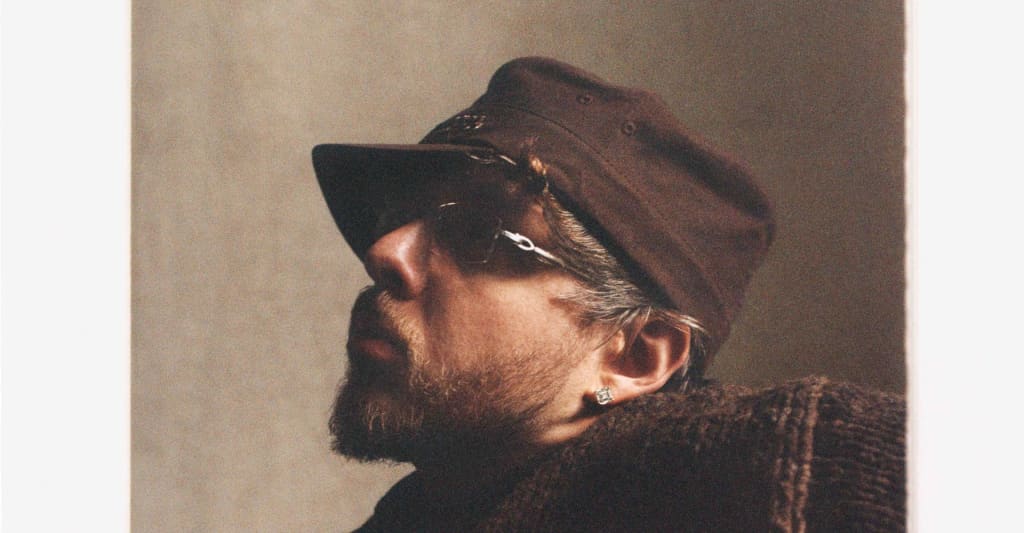
Jack Harlow has officially signaled a bold departure from his hip-hop roots with the release of his latest studio album, Monica, which arrived today via Atlantic Records. Rather than leaning into the rhythmic intensity of his previous work, the Louisville native has pivoted toward the lush, organic textures of neo-soul, challenging the existing expectations surrounding white artists navigating Black-originated musical genres.
A Conscious Shift in Sound and Identity
The transition arrives at a pivotal moment in the industry. As discussions regarding cultural appropriation and the “white rapper playbook” intensify, Harlow is acutely aware of the path his contemporaries have taken. While peers like Post Malone have successfully migrated to country music and mgk has found a second life in pop-punk, Harlow has made a different choice. During a recent interview on The New York Times’s Popcast, he candidly addressed his evolution, stating, “I got blacker,” while emphasizing his deep-seated appreciation for R&B and melodic, intimate arrangements.
@popcast Are white rappers afforded more freedom to change their genre? Jack Harlow knows some of his white peers who started in hip-hop have chosen country or rock in recent years, but he insists that his new album, “Monica,” is different. “I got Blacker,” Harlow told Popcast’s Jon Caramanica and Joe Coscarelli.
The “Soulquarian” Influence and Aesthetic Evolution
Recorded at the legendary Electric Lady Studios in New York City, Monica draws heavily from the late 90s and early aughts neo-soul movements. Fans have been quick to draw parallels between Harlow’s new direction and the “Soulquarian” collective—the experimental group featuring luminaries like D’Angelo, Erykah Badu, and Questlove. Harlow’s new aesthetic—incorporating oversized scarves, creative headwear, and a more introspective lyrical focus—mirrors this shift toward a more vintage, soulful sensibility.
Navigating the Politics of Genre
Despite the sonic pivot, the discourse surrounding the album remains highly polarized. Critics and social media commentators have raised questions about whether a white artist should be the face of an R&B-centric project, given the abundance of Black male R&B artists who have historically driven the genre. Harlow acknowledges these political realities, noting that he is “hyper-aware” of the scrutiny that comes with his creative choices. For him, however, the decision was driven by personal resonance: “I love the sound of soft, intimate, melodic music. I also came to the decision off of what feels good in my ear.”
I’m not listening to no “R&B” album by no damn Jack Harlow when we have all these Black male R&B artists who have BEEN doing this pic.twitter.com/O5WdIPdrpo
— Soul Talk, MSW (@OpenOfficeHrs) March 13, 2026
Reframing the Narrative
The release of Monica is also inextricably linked to the public’s memory of past controversies, including the viral moment involving Brandy that led to a playful lyrical standoff. Yet, Harlow remains focused on the music itself. Whether Monica succeeds as a genuine exploration of R&B or is viewed as another example of genre-hopping, it is clear that Jack Harlow is no longer content to stay within the confines of the traditional “white rapper” narrative. The album is available for streaming across all major platforms starting today.