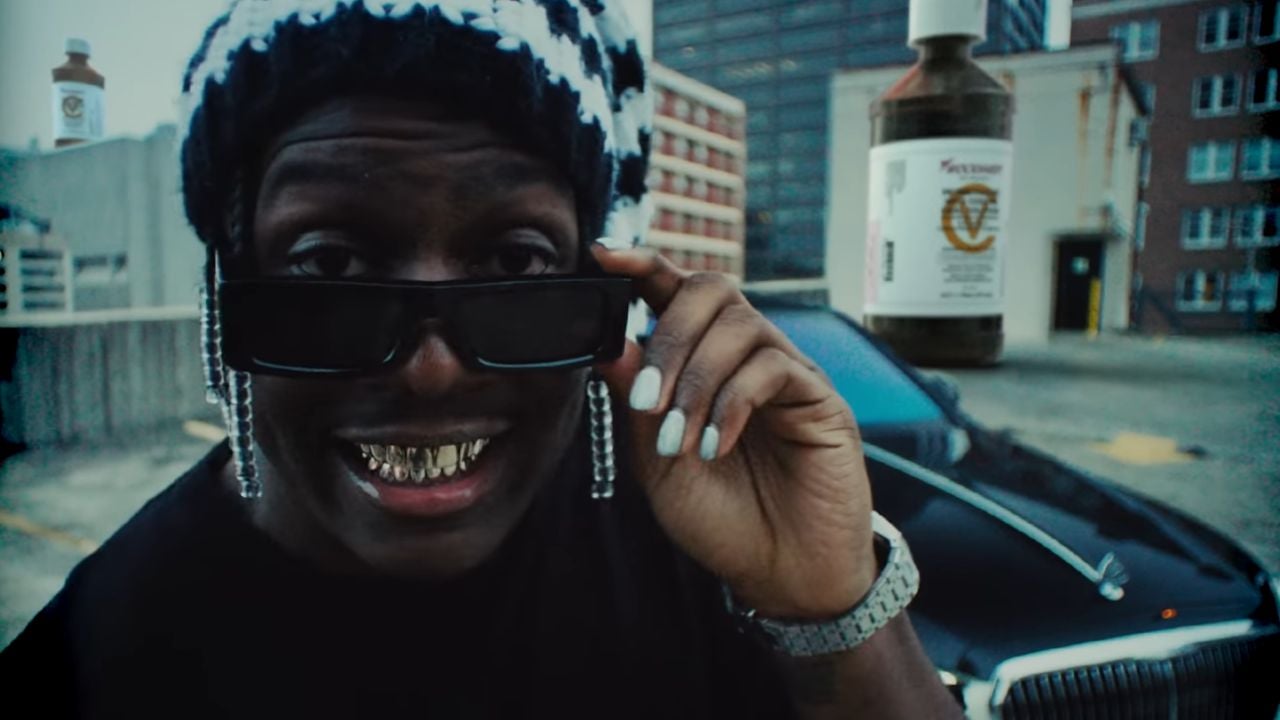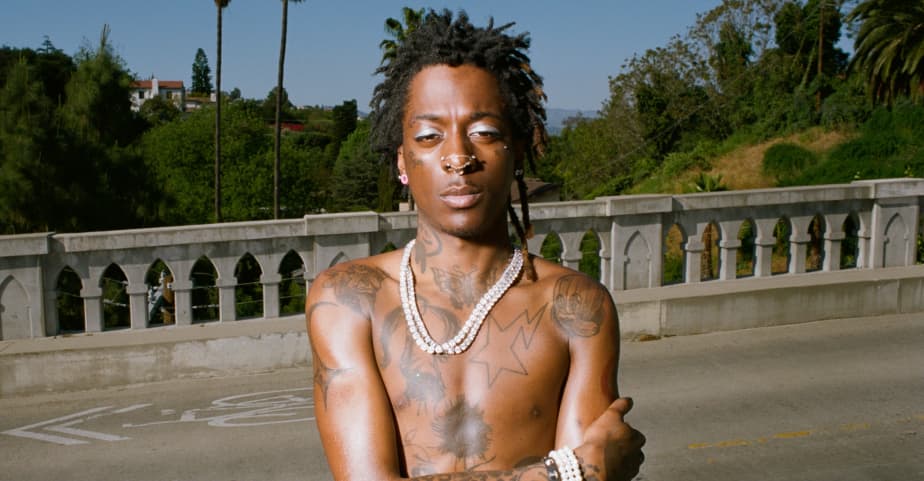
skaiwater is hiding from their fans. Ninety seconds earlier, the 25-year-old had popped out from the backstage catacombs of Chicago’s Avalon Music Hall, hunting for a quiet spot to spark up. But the escape was short-lived; they had exited too close to the stage and were promptly spotted by a handful of people lingering near coat check. skai turned on their heel before the throng could even think to mob them, bursting into giggles. Now in a further corner, they finally feel safe. Their lighter is like a flare in the shadows, but at this distance, their fans couldn’t photograph them if they tried.
skaiwater has been on tour for 19 days. Tonight is show 13 of 15, and their second performance in Chicago. They deliberately chose to book smaller, 300-capacity venues to recapture the intimate energy of seeing Alex G or similar artists in a club setting. As a result, they say, the tour has been “pretty fried.” Every night, fans rush the stage, flinging themselves off into the crowd. Their show in Orlando was especially memorable. “I said to someone the mosh pit looked like boiling water,” skaiwater says.
The Sound of Digital Maximalism
skaiwater’s vision for the tour was for it to be a “madhouse,” an apt summary of how their music feels. On their 2024 album #gigi, skaiwater filtered regional scenes like Atlanta rap and Jersey club into a bass-blown reinvention of dance music. Their latest album, February’s wonderful, abandoned that for straight-up chaos: elements of beats redline, melodies peak through layers of Auto-Tune and distortion, and endlessly sampled vocals smash into each other at similar frequencies. Over the cacophony, skai raps about sex, drugs, and their rock & roll lifestyle, while exploring the way money and success corrupt art and love.
“In the nepotism sense, I’m my own father, you feel me?” they say, taking a long drag of their spliff. “I’m the son of what I’ve done before.”
All art offers a window into the time of its creation, but more than any other contemporary musician, skaiwater sounds like the brutal, beautiful chaos of now. Post-genre and fitting alongside the digital maximalism of artists like Charli XCX, skaiwater’s music can feel like being beset with notifications or pop-up ads. The overstimulation is part and parcel of understanding their vision of rap music today: what it’s like living in a country that supports fascism at home and genocide abroad, and all the mindless complacency that fuels these cycles of violence.
Navigating the Industry
skaiwater’s journey has been a whirlwind: establishing a foothold in the SoundCloud underground, inking a deal with GoodTalk, going viral on TikTok, and releasing projects on Geffen Records, before eventually cinching a new deal with Capitol Records. But in February 2025, they turned their back on the industry to go independent again. When asked if artists in 2026 still need record label infrastructure, skai offers an unexpectedly diplomatic answer. “I think everybody needs it if you want to get anywhere in this industry,” they sigh. “You need the right people. I was blessed enough to be able to make that decision; a lot of people can’t.”
Their music, however, tells a more caustic story. On “MARILYN,” the penultimate song of wonderful, skai raps, “I’m over it, said fuck a major label / as for now, niggas still getting paid.” It is this candor that has garnered them a fervent fanbase—legions of teens and 20-somethings who show up to shows with trinkets for skaiwater to sign. Despite the predictably close-minded commenters online, skaiwater remains unphased. “It’s not my business how people feel about me,” they say. “I’ve been here from the jump. I came in this bitch, knowing what the fuck I wanted to do.”