CyHi The Prynce Ignites New J. Cole Diss Track “B.R.A Lost Control” Amidst Lingering Beef Fallout
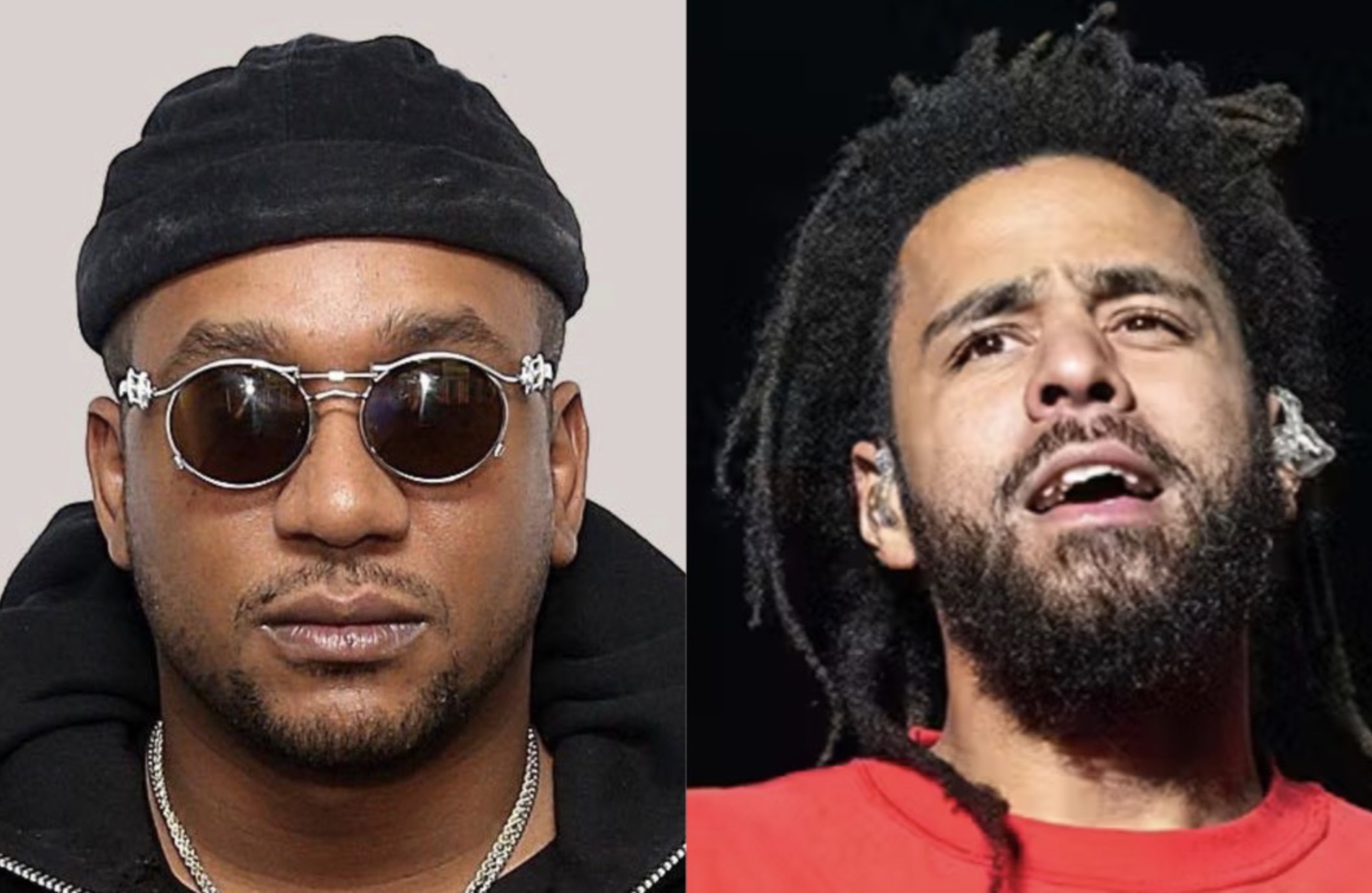
The intricate and often volatile landscape of hip-hop beef has once again been stirred, this time by veteran lyricist CyHi The Prynce. In a surprising move, CyHi has released a new track titled “B.R.A Lost Control,” which contains direct and pointed criticisms aimed at J. Cole. This development reignites discussions surrounding Cole’s controversial decision to retract his Kendrick Lamar diss track, “7 Minute Drill,” following Dreamville Fest 2024, a move that has continued to draw both praise for its maturity and significant backlash for its perceived lack of competitive spirit.
CyHi’s entry into this ongoing narrative adds another layer of complexity, suggesting that the reverberations of Cole’s actions are far from settled within the rap community. His new song not only addresses the recent events but also appears to dredge up older grievances, hinting at a deeper, long-simmering discontent with Cole’s artistic persona and perceived authenticity.
The Aftermath of “7 Minute Drill”: J. Cole’s Controversial Retreat
The hip-hop world was set ablaze in early 2024 when the long-anticipated lyrical clash between J. Cole and Kendrick Lamar finally erupted. Following Kendrick’s incendiary verse on Future and Metro Boomin’s “Like That,” J. Cole swiftly responded with “7 Minute Drill,” a track featured on his surprise project, *Might Delete Later*. The song, a direct counter to Lamar’s challenge, showcased Cole’s formidable lyrical abilities and was initially met with a mix of excitement and anticipation for a full-blown rap battle.
However, the narrative took an unexpected turn at Dreamville Fest 2024. During his headlining performance, J. Cole publicly apologized to Kendrick Lamar and his fans, expressing regret for releasing “7 Minute Drill.” He described the diss track as feeling “lame” and announced his intention to remove it from streaming platforms. This unprecedented move sent shockwaves through the industry. While some lauded Cole for his humility and willingness to prioritize peace over conflict, many within the hip-hop community, particularly those who value the competitive essence of battle rap, viewed it as a sign of weakness or a retreat from a challenge. This sentiment of disapproval has lingered, with various artists subtly and overtly expressing their disagreement with Cole’s decision, setting the stage for CyHi The Prynce’s recent intervention.
The Unfolding Kendrick-Cole Saga and Its Impact
The beef between Kendrick Lamar and J. Cole was more than just a lyrical exchange; it was a clash of titans, two of the most respected lyricists of their generation. Kendrick’s initial jab on “Like That” was a direct challenge to Cole’s self-proclaimed status alongside him and Drake as the “big three.” Cole’s “7 Minute Drill” was a measured, yet potent, response, dissecting Kendrick’s discography and questioning his impact. The anticipation for Kendrick’s rebuttal was palpable, with fans and critics alike bracing for a historic rap battle.
Cole’s subsequent apology and retraction, however, deflated much of that tension. It raised fundamental questions about the nature of competition in hip-hop, the role of authenticity, and the pressure artists face from their peers and fanbases. For many, the act of backing down from a lyrical confrontation, especially one so high-profile, went against the unwritten rules of the genre. This perceived breach of hip-hop etiquette has fueled a continuous undercurrent of criticism, with artists like CyHi now stepping forward to voice their dissent, suggesting that Cole’s move had broader implications for the culture than just a personal decision.
CyHi’s Lyrical Provocation: A Decade-Old Grievance and Modern Critique
CyHi The Prynce, known for his sharp lyricism and significant contributions as a ghostwriter and collaborator within Kanye West’s G.O.O.D. Music collective, has now positioned himself as a vocal critic of J. Cole’s recent actions. His involvement isn’t entirely out of the blue, as he had previously hinted at his perspective on the qualities of a true lyricist.
A few weeks prior to the release of “B.R.A Lost Control,” CyHi posted a tweet that sparked initial speculation:
https://x.com/cyhiofficial/status/2027110013483835818?s=61
(Original tweet from @cyhiofficial, content not directly provided in source, but context implies a critique of lyricists lacking street experience.)
In this tweet, CyHi articulated a viewpoint that resonated with many traditionalists in hip-hop: that genuine lyricists often emerge from street experiences, contrasting them with those who are merely adept with words but lack real-world grit. This statement was widely interpreted by fans and commentators as a subtle jab at J. Cole, whose persona, while deeply introspective and skilled, is often seen as less rooted in overt street narratives compared to some of his peers.
The Resurgence of “False Prophets” and CyHi’s Motivation
CyHi initially clarified that his tweet wasn’t directly aimed at Cole. However, he quickly pivoted, stating that the discussion around it had reminded him of something he had wanted to address for a long time. This “something”, he revealed, stemmed from J. Cole’s 2016 track “False Prophets.” On that song, Cole offered a reflective critique of artists he once admired, acknowledging their human flaws and the disillusionment that can come with idolizing public figures. While many believed “False Prophets” contained veiled references to Kanye West, CyHi now suggests he took personal offense to certain lines, despite the song being nearly a decade old.
The timing of CyHi’s resurfaced grievance is crucial. It implies that Cole’s recent retraction from the Kendrick beef served as a catalyst, bringing old resentments to the forefront. For CyHi, Cole’s apology might have validated a long-held perception of Cole’s character or artistic integrity, making him feel compelled to finally speak out. This confluence of past slights and present controversies provides a potent backdrop for “B.R.A Lost Control,” transforming it from a simple diss track into a statement on authenticity and consistency within the rap game.
Dissecting “B.R.A Lost Control”: A Direct Challenge to Cole’s Authenticity
With the release of “B.R.A Lost Control,” CyHi The Prynce leaves no room for ambiguity regarding his target. The track is a direct and unvarnished assault on J. Cole, primarily focusing on his decision to withdraw from the highly anticipated lyrical battle with Kendrick Lamar. CyHi’s lyrics are designed to question Cole’s courage, his commitment to the competitive spirit of hip-hop, and ultimately, his authenticity as a top-tier lyricist in an era defined by high-stakes verbal warfare.
The core message of the song revolves around the idea that Cole “lost control” by backing down. CyHi challenges Cole to “watch his mouth,” implying that Cole’s public apology and subsequent statements have undermined his standing and opened him up to criticism. This isn’t just a critique of a single action; it’s an indictment of what CyHi perceives as a fundamental flaw in Cole’s approach to the rap game. The track likely contains lines that directly reference the “7 Minute Drill” incident, perhaps mocking the apology or the perceived fear of engaging in a full-fledged lyrical war with Kendrick.
Beyond the immediate context of the Kendrick beef, “B.R.A Lost Control” also seems to tap into CyHi’s earlier sentiments about “street lyricists” versus those who are merely “good with words.” By linking Cole’s recent actions to a decade-old perceived slight from “False Prophets,” CyHi paints a picture of an artist who, in his view, lacks the consistent backbone or real-world experience to stand firm in the face of adversity. The track serves as a declaration that in hip-hop, especially at the highest echelons, actions and words carry weight, and a retreat can be seen as a betrayal of the culture’s competitive ethos.
Lyrical Themes and Delivery
While specific lyrics from “B.R.A Lost Control” are not detailed in the original article, the description suggests a direct, confrontational style. CyHi, known for his intricate wordplay and storytelling, likely employs metaphors and punchlines that underscore his critique of Cole’s perceived capitulation. The track’s production would also play a crucial role, potentially featuring a hard-hitting beat that complements the aggressive lyrical content, typical of a classic diss record. The delivery would be confident and assertive, aiming to project strength and conviction in contrast to the perceived weakness of his target.
The song’s title itself, “B.R.A Lost Control,” is provocative, hinting at a loss of composure or strategic misstep on Cole’s part. This track isn’t just a casual jab; it’s a deliberate attempt to challenge Cole’s standing and perhaps even provoke a response, pushing him back into the competitive arena he seemingly tried to exit. CyHi’s decision to release this track underscores the deep-seated values within hip-hop that prioritize lyrical combat and unwavering confidence, especially when challenged by a peer.
The Enduring Debate: Street Credibility vs. Lyrical Prowess in Hip-Hop
CyHi The Prynce’s diss track against J. Cole, and his preceding comments about lyricists, tap into a perennial debate within hip-hop culture: the interplay between street credibility, authentic life experience, and pure lyrical skill. For decades, the genre has grappled with the question of what truly defines a “real” rapper. Is it the ability to craft intricate rhymes and complex metaphors, or is it the lived experience that informs those rhymes, particularly those rooted in hardship and street life?
CyHi’s initial tweet, emphasizing lyricists “from the streets” versus those “just good with words,” highlights this divide. It suggests a belief that true lyrical depth and authority come from a certain kind of struggle or background, implying that technical skill alone is insufficient. This perspective often underpins criticisms of artists perceived as too academic, too polished, or too removed from the raw realities that birthed hip-hop. J. Cole, despite his undeniable lyrical talent and storytelling prowess, has sometimes faced this critique, with some arguing that his narrative lacks the visceral edge associated with more “street-oriented” artists.
Authenticity, Image, and the Rap Game
The concept of authenticity is paramount in hip-hop. Fans and peers alike scrutinize artists for any perceived inconsistencies between their music, their public persona, and their real-life actions. Cole’s apology for “7 Minute Drill,” while potentially a mature personal decision, was interpreted by many as a lapse in authenticity within the context of a rap beef. In a genre where bravado and unwavering confidence are often celebrated, backing down can be seen as a violation of an unspoken code.
CyHi’s track, therefore, isn’t just about a specific incident; it’s a broader commentary on what it means to be a respected figure in hip-hop. It suggests that a rapper’s words must be backed by a certain level of conviction and a willingness to stand by them, especially in a confrontational setting. This debate over authenticity versus strategic maneuvering, and street credibility versus pure artistry, continues to shape the discourse around hip-hop’s biggest names, and CyHi’s “B.R.A Lost Control” serves as a potent reminder of its enduring relevance.
What’s Next for the Rap Landscape? Potential Responses and Future Implications
The release of CyHi The Prynce’s “B.R.A Lost Control” has undoubtedly injected new energy into the ongoing discussions surrounding J. Cole’s position in hip-hop. The immediate question on everyone’s mind is whether J. Cole will respond. His previous decision to retract “7 Minute Drill” suggests a preference for avoiding prolonged conflict, especially one that he initiated and then regretted. However, a direct diss from a respected peer like CyHi, particularly one that questions his authenticity and courage, might be harder to ignore. A non-response could be interpreted by some as further validation of CyHi’s claims, while a response would force Cole back into the very type of lyrical battle he recently tried to exit.
If Cole chooses to respond, it would mark a significant shift in his recent public stance and could reignite the competitive fires that have been somewhat dampened since the Kendrick Lamar situation. A response from Cole would need to be carefully crafted, addressing CyHi’s specific criticisms while also reaffirming his own artistic integrity and perhaps explaining his previous actions in a new light. The stakes are high, as any misstep could further complicate his image.
The Broader Impact on CyHi and the Culture
For CyHi The Prynce, this diss track could serve as a powerful reassertion of his lyrical prowess and his commitment to the traditional values of hip-hop. It places him squarely in the conversation, potentially elevating his profile and reminding the industry of his sharp pen. In an era where viral moments and bold statements often dictate attention, a well-executed diss track can be a career-defining move. However, it also carries risks, as any perceived miscalculation could backfire.
More broadly, this development underscores the cyclical nature of hip-hop beefs and the constant pressure on artists to maintain a consistent and authentic image. It highlights that even after a public apology and withdrawal, the consequences of such actions can linger and be revisited by other artists. The incident serves as a reminder that in hip-hop, the court of public opinion, particularly among peers, is always in session, and perceived missteps can become fodder for future lyrical confrontations. The rap landscape remains dynamic, with artists continually challenging and redefining the boundaries of competition and collaboration.
Frequently Asked Questions (FAQ)
Q1: Why did CyHi The Prynce release a diss track against J. Cole?
CyHi The Prynce released “B.R.A Lost Control” primarily due to J. Cole’s controversial decision to retract his diss track “7 Minute Drill” against Kendrick Lamar at Dreamville Fest 2024. CyHi, along with many other rappers, viewed Cole’s retreat as a sign of weakness or a lack of competitive spirit. Additionally, CyHi revealed that the situation resurfaced old grievances he held against Cole, stemming from lines in Cole’s 2016 song “False Prophets” that he took offense to.
Q2: What was J. Cole’s “7 Minute Drill” controversy?
J. Cole released “7 Minute Drill” as a response to Kendrick Lamar’s verse on “Like That,” which challenged Cole and Drake. After releasing the track on his album *Might Delete Later*, Cole publicly apologized at Dreamville Fest 2024, stating he regretted the diss and would remove it from streaming platforms. He felt the track was “lame” and didn’t align with his values, leading to mixed reactions from fans and the hip-hop community.
Q3: What is the significance of J. Cole’s “False Prophets” in this new beef?
“False Prophets” is a 2016 J. Cole track where he reflects on idolizing artists and their human flaws. While often interpreted as a critique of Kanye West, CyHi The Prynce claims he took personal offense to certain lines in the song. The recent “7 Minute Drill” controversy seemingly served as a catalyst for CyHi to address this decade-old grievance, linking Cole’s past lyrical content to his present actions and questioning his overall authenticity.
Q4: What are the main themes of CyHi’s “B.R.A Lost Control”?
The main themes of “B.R.A Lost Control” include questioning J. Cole’s courage and authenticity for backing down from the Kendrick Lamar beef, challenging his lyrical integrity, and asserting the importance of standing firm in rap confrontations. CyHi’s track also subtly reinforces the debate about street credibility and lived experience versus pure lyrical skill in hip-hop.
Q5: Will J. Cole respond to CyHi The Prynce’s diss track?
It is currently uncertain whether J. Cole will respond to CyHi The Prynce. While Cole recently expressed a desire to avoid prolonged beefs by retracting “7 Minute Drill,” a direct diss from a respected peer like CyHi, especially one that questions his character and authenticity, could be difficult to ignore. A response would mean re-engaging in the type of lyrical combat he recently tried to step away from, while a non-response might be seen as further validation of CyHi’s criticisms.